
Why Do I Feel Lost in My 20s? The Hidden Meaning Behind the Quarter-Life Crisis
Feeling stuck or uncertain in your 20s? Explore why this phase isn’t failure—but a hidden turning point toward clarity, alignment, and self-understanding.
A quiet confusion unfolds in your 20s—not as failure, but as transformation. What feels like being lost may actually be the beginning of alignment and self-discovery.
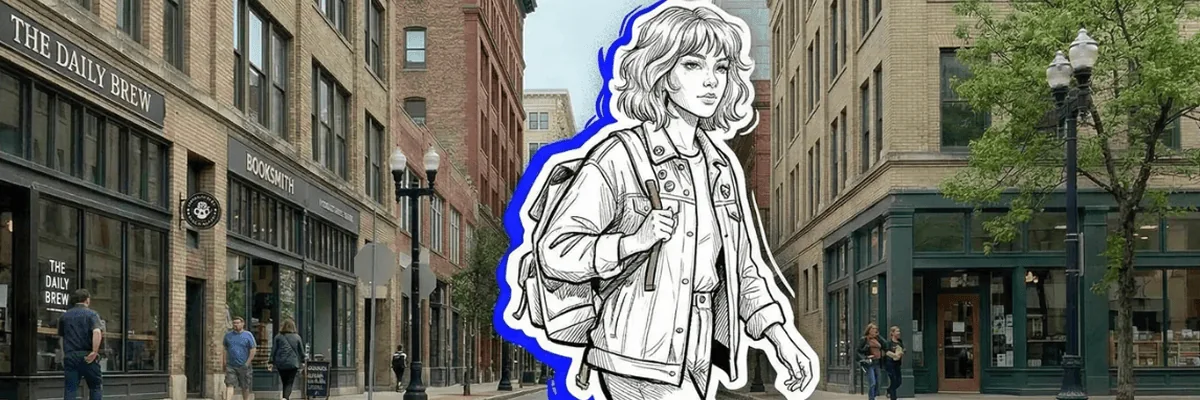
There’s a very specific kind of confusion that tends to surface in your 20s.
It doesn’t usually arrive as chaos. Life on the outside may look stable enough—work, relationships, plans that technically make sense. And yet, something beneath it all feels quietly misaligned. Not broken. Not dramatic. Just unfamiliar, as if you’re living slightly off from where you’re supposed to be.
If you’ve ever found yourself thinking, “Why do I feel lost in my 20s?” or searching for meaning in that in-between space where nothing feels fully right—you’re not alone.
And in numerology, this feeling is not random at all.
It is often the first signal that your inner structure is beginning to shift.
The Real Meaning of Feeling Lost in Your 20s
From a conventional point of view, your 20s are meant to be about building a life: career progress, relationships, identity, direction, stability.
But from a numerology perspective, your 20s are not about building at all.
They are about transitioning between identities.
A threshold phase.
A liminal space between who you were shaped to be… and who your deeper structure is trying to become.
And threshold spaces rarely feel stable.
They feel like uncertainty. Rewriting. Emotional friction. Internal questioning. Or what most people label as feeling lost in life in your 20s.
Why this feeling emerges
Numerology views life as unfolding in energetic cycles, each one carrying a different psychological and existential tone. In your 20s, you often begin to shift out of inherited programming and into individual alignment.
That means moving between:
- Early conditioning (family expectations, education, cultural scripts)
- Inner alignment (your numerology-based core pattern and personal direction)
This transition creates internal tension.
And that tension rarely feels poetic at first.
It feels like:
- confusion without a clear cause
- motivation dropping for no reason
- overthinking every direction you take
- a sense that life is happening, but not feeling like yours
In numerology terms, these are not random emotional fluctuations.
They are misalignment signals during a cycle shift.
Why Your 20s Feel Emotionally Unstable (Even When Life Looks Fine)
One of the most common experiences in your 20s is this contradiction:
Externally, things are “fine.” Internally, something feels unstable.
This happens because your external structure often lags behind your internal shift.
You may notice:
- repeated changes in direction (jobs, studies, relationships)
- sudden dissatisfaction with paths you once wanted
- a quiet sense of disconnection from your own choices
- feeling like you are performing a version of life rather than living it
Numerology interprets this as a realignment phase, not a breakdown.
You are not losing direction.
You are becoming sensitive to directions that are not yours.
Life Path Number: The Blueprint Behind Feeling Lost
At the center of numerology is your Life Path Number, derived from your birth date.
It represents your core trajectory—the underlying pattern of how your life is meant to unfold, learn, and evolve.
When people search “why do I feel lost in my 20s”, the answer often lies here:
They are living in partial or indirect conflict with their Life Path expression.
Examples:
- Life Path 1: may feel lost when dependent on external validation instead of independence
- Life Path 2: may feel stuck when constantly adjusting to others’ expectations
- Life Path 5: may feel trapped when life becomes too structured or repetitive
This mismatch doesn’t create failure.
It creates friction.
And friction is often experienced emotionally as confusion, restlessness, or lack of direction.
But in numerology, friction is not negative—it is informative.
It shows you where alignment has not yet happened.
The Quarter-Life Crisis Is Not Random
What modern psychology often calls a quarter-life crisis aligns closely with what numerology describes as a phase transition in identity cycles.
Around your mid-to-late 20s, something subtle but irreversible begins to happen:
You start questioning not just what you are doing—but why you are living this way at all.
This phase tends to surface questions like:
- What actually matters to me beyond expectations?
- What kind of life feels real, not just impressive?
- What parts of my identity no longer feel true?
- What am I willing to let go of, even if it’s familiar?
This is where many people feel destabilized.
Because you are no longer fully inside your old identity…
…but not yet fully inside the new one.
Numerology does not interpret this as collapse.
It interprets it as initiation into self-awareness.
The Role of Soul Urge and Expression Numbers
While the Life Path Number shows direction, other numerology layers explain why internal conflict feels so personal.
Soul Urge Number (Inner Emotional Truth)
This reflects your deeper desires—what your emotional core quietly seeks, often beneath logic or expectation.
When it is not aligned with your current life, you may feel:
- emotionally disconnected even in “good” circumstances
- a quiet longing you cannot fully explain
- dissatisfaction without a clear reason
Expression Number (Outer Potential)
This represents how your natural abilities are meant to manifest in the world.
When underused or misaligned, it can feel like:
- being capable of more but not knowing where to apply it
- creative or intellectual blockage
- a persistent sense of underexpression
Together, these layers explain why feeling lost in your 20s is often not about external failure—but internal mismatch between potential and expression.
Why This Decade Feels Like an Awakening Phase
Your 20s are uniquely intense because they sit at the intersection of three forces:
- inherited belief systems
- real-world consequences
- emerging self-awareness
This combination creates pressure that cannot be resolved through simple decision-making.
You begin to see through inherited narratives.
You begin to notice patterns you once ignored.
You begin to feel your deeper direction—without fully understanding it yet.
In numerology, this is not confusion.
It is awakening without language yet formed.
You are not expected to have clarity.
You are expected to become aware.
What If Feeling Lost Is Actually Direction Beginning to Form?
This is the key shift in perspective.
What if feeling lost in your 20s is not evidence that something is wrong…
but evidence that something is beginning to reorganize itself within you?
In numerology, discomfort often appears right before alignment becomes visible.
The feeling of “this isn’t it” is not an endpoint.
It is a directional signal.
A quiet internal correction toward what is more authentic.
How Numerology Helps You Find Direction
Clarity rarely comes from forcing decisions.
It comes from recognizing patterns.
When you understand your numerology profile, you begin to notice:
- why certain choices repeatedly lose meaning over time
- why specific relationships or paths feel naturally aligned or misaligned
- why motivation rises and falls in recognizable cycles
This doesn’t just explain your past.
It changes how you interpret your present.
And that shift is often what allows new decisions to emerge naturally.
A More Personal Way to Understand Your Inner Pattern
Most numerology tools provide static definitions.
But human experience is not static.
It evolves, shifts, and reacts.
Life Compass approaches numerology differently.
It builds a multi-layered reading based on:
- Life Path Number
- Soul Urge Number
- Expression Number
- Personality and Maturity Numbers
And then it adds something unusual:
It translates your numerology structure into a personal soundscape—a piece of music shaped by your internal pattern.
Not as entertainment.
But as reflection.
Because some forms of understanding are not meant to be analyzed.
They are meant to be felt.
Discover Your Personal Life BlueprintWhen Self-Understanding Begins, Behavior Follows
People often report subtle shifts after exploring their numerology profile:
- decisions become less emotionally forced
- repeated life patterns become easier to recognize
- the pressure to “have everything figured out” softens
- direction emerges gradually instead of suddenly
Not because life becomes simpler.
But because self-perception becomes clearer.
You Are Not Behind. You Are Transitioning.
It is easy to believe that others have already figured things out.
But what you are experiencing in your 20s is not lack of progress.
It is movement through an internal reorganization phase.
Between identity and emergence.
Between expectation and authenticity.
Between who you were told to be… and who you are becoming.
And that in-between space often feels like being lost.
But in numerology, it has another name:
alignment in progress.
Start From Where You Are
You do not need complete clarity to begin.
You only need a willingness to understand yourself differently.
If you’ve been asking “Why do I feel lost in my 20s?”, this is where interpretation becomes insight:
Generate Your Free Life Compass ReadingBecause once you begin to see your inner structure…
being “lost” starts to feel less like confusion—
and more like a path slowly revealing itself.